Commercial roofing leads from owners and facility managers: full guide (8 sections)
- What counts as a commercial roofing lead?
- Which filters matter on a commercial lead?
- A quick glossary of roof systems you'll see on leads
- How do you check a commercial lead before sending an estimator?
- How should you work a long commercial cycle?
- Commercial leads compared with other ways to find commercial work
- What should be in writing before you buy?
- FAQ
Commercial roofing leads are project inquiries from people who own, manage or maintain a commercial building and asked a roofing contractor to contact them. They are customer leads for roofers, not lead metal for flashing. This guide covers, as of October 2026, what a commercial lead should contain, how the filters work, how to check a lead before you spend estimator time on it, and how to work a long sales cycle without losing the job.
Whether we can supply commercial leads in your territory is confirmed on your call. If you want to check, book a call.
What counts as a commercial roofing lead?
A commercial roofing lead is a record created when a contact at a non-residential or multifamily property requests contact from a roofer about a specific building. It should name the person, their role, the property address, the roof system if known, the project type and a timeline, plus a consent record showing when and how they agreed to be contacted.
That definition rules out three things that often get sold under the same label:
- Facility data records. A building, an owner name from public records and a main phone number. Nobody asked for a roofer. These are prospecting lists, and you are cold calling.
- Permit and sale triggers. Useful signals that a building may need work, but again, nobody asked.
- Residential leads tagged "commercial". A homeowner who runs a business from home is not a commercial roof. Ask how the vendor separates them.
Which filters matter on a commercial lead?
The filters that matter are the ones that decide whether your crew can do the job and whether the contact can sign: territory, building type, roof system, approximate roof size, contact role and project type. Agree every one in writing before the first lead is sent, along with what happens when a lead misses a filter.
Here is how each filter is usually captured and how far to trust it:
| Filter | How it's captured | How far to trust it |
|---|---|---|
| Territory (ZIP or county) | Property address on the request | High. Check it against your map on arrival. |
| Building type | Contact picks from a list | Medium. Confirm on the first call. |
| Roof system | Contact picks TPO, EPDM, PVC, mod bit, built-up, metal or "not sure" | Low to medium. Many managers don't know. Confirm on the roof walk. |
| Roof size band | Contact's estimate | Low. Measure before pricing. |
| Contact role | Contact picks owner, property manager, facility manager or other | Medium. Ask who else approves. |
| Project type | Repair, recover, replacement or inspection | Medium. Leaks often turn into recover talks. |
| Timeline | Now, 3 months, 12 months, budgeting | Medium. Use it to sort, not to forecast. |
A note on tight filters: every filter you add shrinks the pool. Commercial inquiries are already thinner than residential ones in most markets, so check expected volume in your ZIPs before you lock the filters down.
A quick glossary of roof systems you'll see on leads
Roof system answers on commercial leads come from the contact, so it helps to know what each term usually means and what follow-up questions to ask.
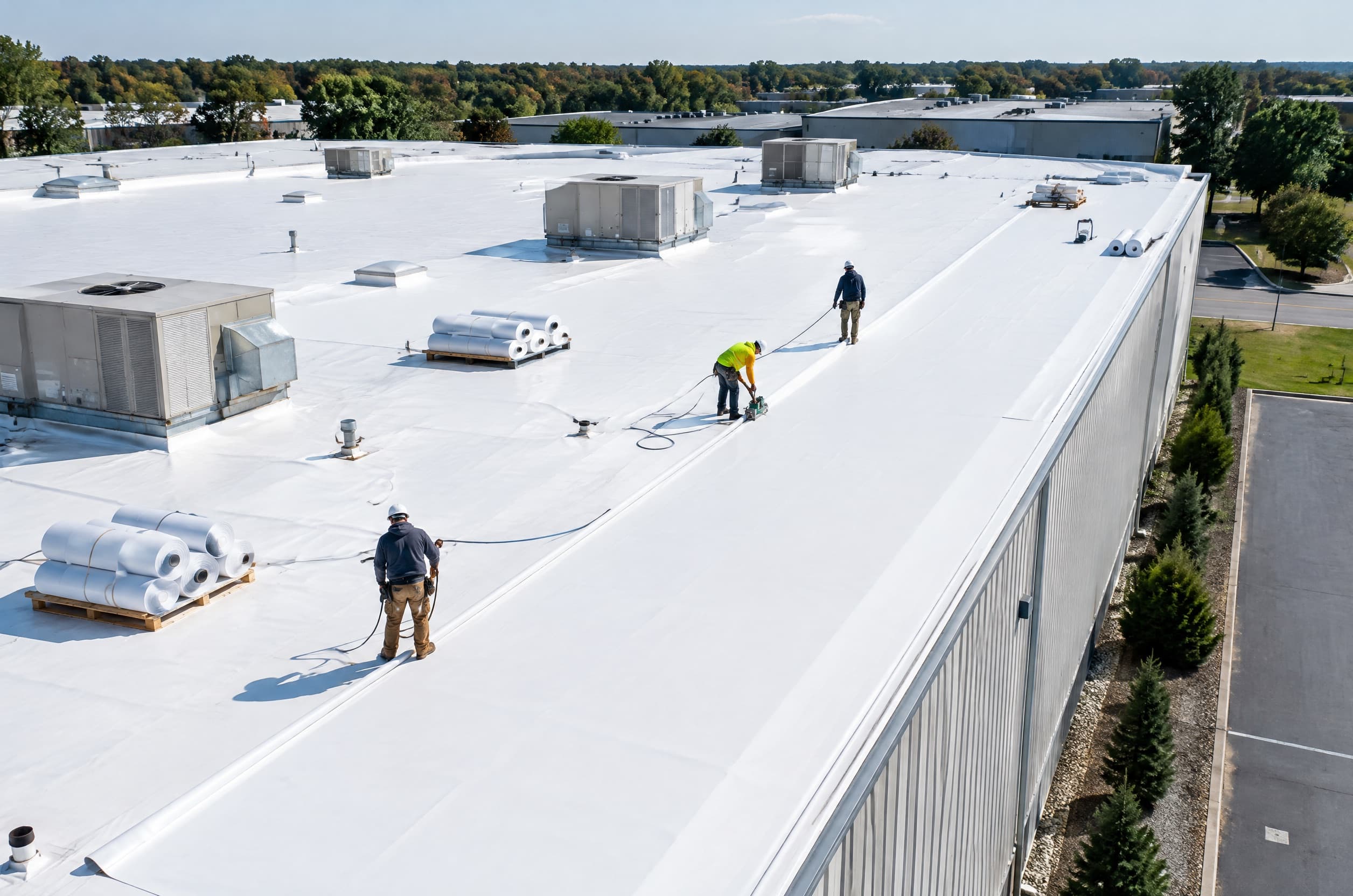
- TPO (thermoplastic polyolefin): white or light single-ply membrane, heat-welded seams. Common on warehouses and retail.
- EPDM: black rubber single-ply membrane, usually glued or ballasted. Ask about age and seam condition.
- PVC: single-ply thermoplastic, heat-welded, often on restaurants and buildings with grease or chemical exposure.
- Modified bitumen (mod bit): asphalt-based rolled sheets, torched or cold-applied, often in two plies.
- Built-up roof (BUR): layers of felt and asphalt, usually with gravel. Older buildings.
- Metal: standing seam or through-fastened panels. Ask whether they want repair, coating or replacement.
- Recover: a new roof installed over the existing one. Whether a recover is allowed depends on the existing layers and local code, so check before you quote it.
When a contact answers "not sure", treat that as normal, not as a bad lead.
How do you check a commercial lead before sending an estimator?
Check a commercial lead in five minutes before you commit a site visit: confirm the address is in your territory, reach the contact and confirm their role, confirm the building and the roof problem, ask who else approves and when, and look at the consent record. If any of those fails, decide whether it qualifies for a credit under the written policy.
A practical walkthrough:
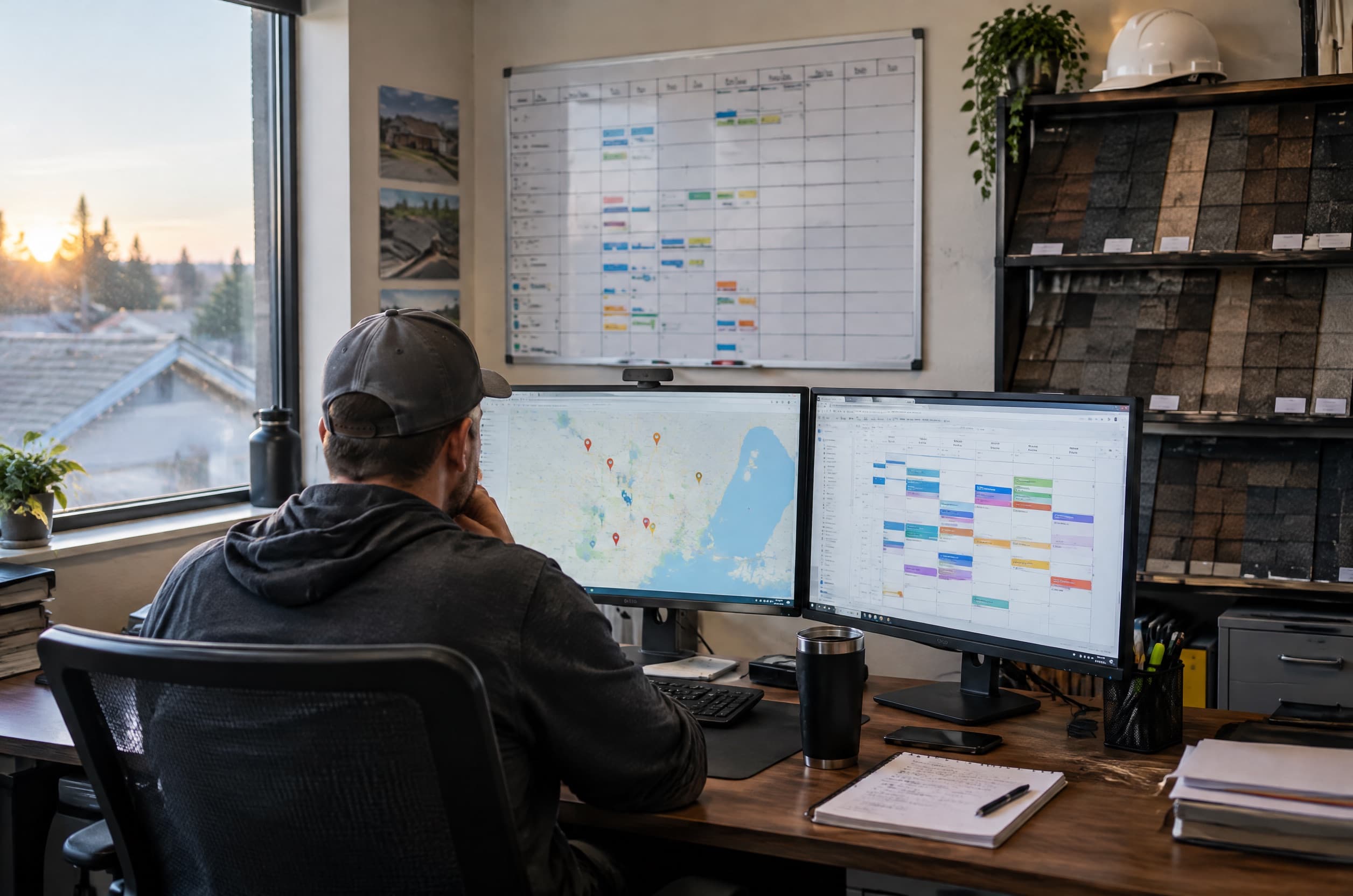
- Address. Drop it on a map. Is it in your ZIPs or counties? Is it actually a commercial building (satellite view usually tells you)? Outside your territory is a credit reason under our written policy.
- Phone and contact. Call within minutes. A disconnected or wrong number is a credit reason. Note how long it took you to call.
- Role. "Are you the person who handles the roof budget for this building?" If not, get the name of who does and whether you can be introduced.
- The roof. What's happening, where, since when, and has anyone else looked at it? Ask for photos of the interior damage if there's a leak.
- Approval path. Who signs, what's the budget process, and is there a bid deadline?
- Consent. Every lead carries a timestamped consent record. If you want to see it, ask, and we send it.
Then book the roof walk. Anything you can't confirm goes into your CRM notes, not into your price.
How should you work a long commercial cycle?
Work a commercial lead in two tracks. Urgent leaks and repairs get a fast site visit and a repair proposal, because that is often how you earn the bigger job later. Budgeting-stage contacts get a written scope, photos, a rough range and a scheduled follow-up timed to their budget date, so you're on the bid list when money is approved.
What helps on the longer track:
- A written scope with photos and a core or moisture survey where it makes sense. It is the document the manager forwards to whoever approves.
- Options. Repair, recover and replace, with the trade-offs in plain language. Managers often need to show they looked at more than one.
- A follow-up date tied to their calendar, not yours. Ask when budgets are set and put it in the CRM.
- Maintenance. A roof maintenance agreement keeps you on the property between projects.
Measure the program by signed contracts and revenue per lead, not by bids sent. A useful sense check from a roofing CRM vendor's own survey: 41% of roofers respond to a new lead within 0 to 29 minutes, 48% within 1 to 12 hours and 11% take more than a day (JobNimbus Peak Performance 2026, accessed October 2026; vendor survey, mostly residential roofers). Being in the first group is a choice your office can make.
Commercial leads compared with other ways to find commercial work
Bought commercial leads are one channel among several, and they work best alongside the others. Referrals from property managers and general contractors tend to be the cheapest per job but are slow to build. Cold outreach to facility lists scales, but nobody asked. Inquiries cost more per record because a person asked for a roofer about a specific building.
| Channel | Who starts it | What you pay for | Main risk |
|---|---|---|---|
| Referrals (PMs, GCs) | Someone who trusts you | Relationship time | Slow to build, uneven volume |
| Facility data list | You | Records, often on a subscription | No stated need, no consent to call |
| Your own ads and SEO | The contact | Ad spend and agency time | Takes months to tune |
| Bought commercial inquiries | The contact | Each lead | Vendor quality, so get terms in writing |
For a wider look at every channel, read how to get roofing leads. For market prices, see roofing leads cost. To check what a vendor means by exclusive, read exclusive roofing leads.
What should be in writing before you buy?
Before you buy commercial roofing leads from anyone, get five things in writing: how many companies receive each lead, which filters apply and how each is checked, what qualifies for a credit and the window to report it, how consent is captured and whether you can see the record, and whether there is a minimum term. If a vendor won't write it down, don't start.
Our own terms are on the pricing page and in the policies section of this page. Every one of them is confirmed on your call before you pay.
General information, not legal advice. Confirm with your counsel.
FAQ
Are commercial roofing leads the same as commercial appointments?
No. A commercial lead is a contact who asked to hear from a roofer about a building. An appointment means a site visit is already booked on your calendar. With leads, your team makes the call and books the roof walk. Whether commercial appointments are available in your territory is confirmed on your call, and the terms are written into your order before you pay.
Is a multifamily building a commercial lead?
Usually, yes, when the contact is the owner, property manager or HOA board and the building is large enough to have a low-slope roof or a shared roof budget. A single-family rental owned by an individual is normally treated as residential. Tell us which multifamily buildings you bid, and we write that definition into your building-type filter so there's no argument later.